


speak for ACKO
speak for ACKO
speak for ACKO
Home / International Travel Insurance / Articles / Visa / Common Reasons for Visa Rejection: Why Does a Visa Get Rejected?
Common Reasons for Visa Rejection: Why Does a Visa Get Rejected?
Team AckoJan 19, 2026
Share Post
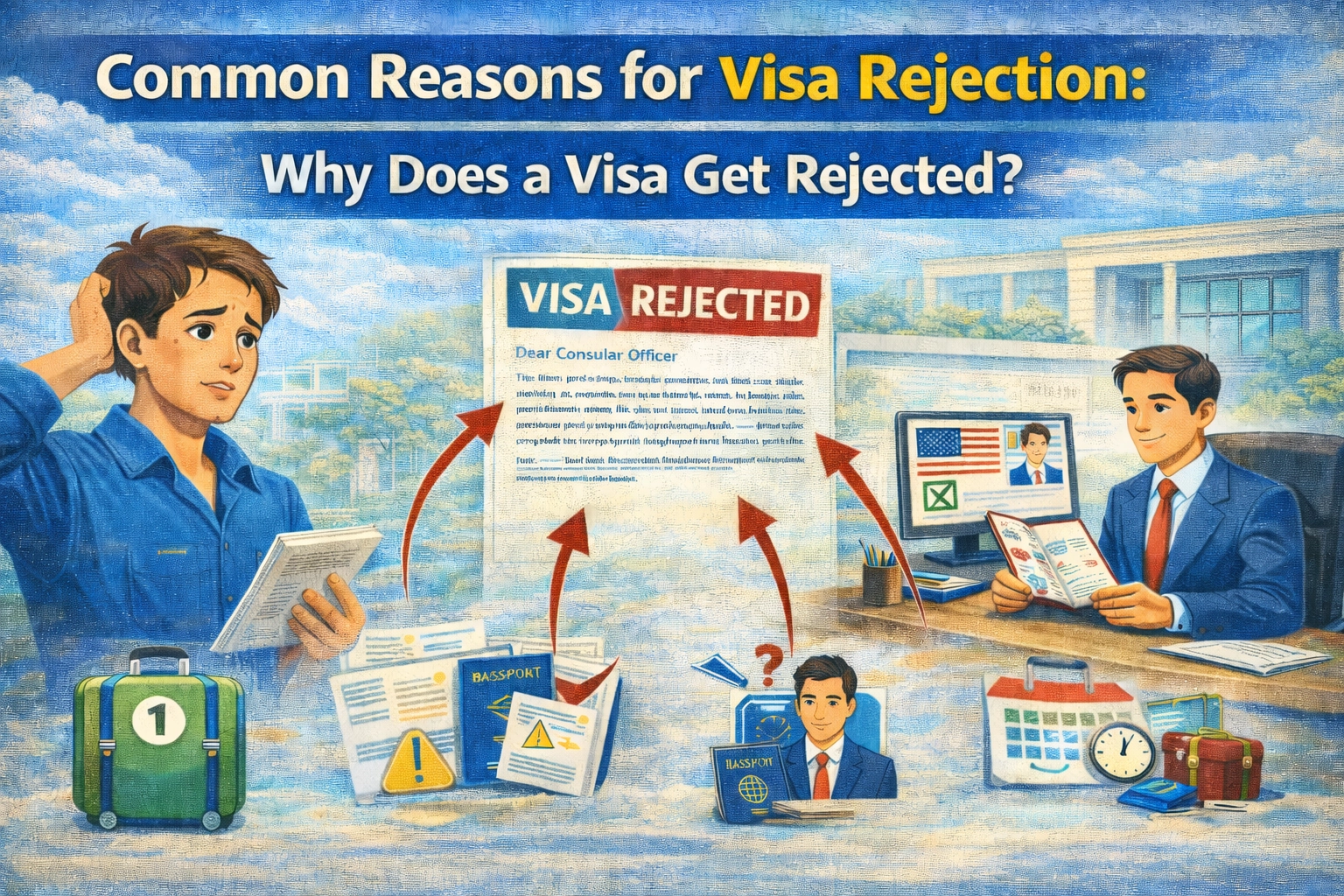
Your visa application for any country can get rejected for multiple reasons, such as an incomplete application, insufficient financial funds, poor travel history, visa overstays, and more. You need to understand that a visa is one of the most essential documents when travelling to a foreign country.
So, whenever you are applying for a visa, it is important to follow all the rules properly and honestly answer in the interview process to avoid visa rejection. Continue reading to get a detailed idea about the reason of rejection of visa.
Contents

- Top 14 Reasons for Visa Rejection
- Incomplete Application:
- Violation of Rules:
- Incomplete Travel Itinerary:
- No or Insufficient Travel Insurance:
- Unclear Purpose of Travel:
- Passport Issues:
- Application Timings:
- Insufficient Funds:
- Crime History:
- Sponsor’s Credibility:
- Lack of Proof of Return:
- Previous Overstay:
- Health Issues:
- Visa Interview Gone Wrong:
- 4 Top Visa Interview Tips to Avoid Rejection
- Difference Between Visa Refusal and Rejection
- Conclusion
- Frequently Asked Questions (FAQs):
Top 14 Reasons for Visa Rejection
From violating rules in a foreign country to not having an idea of visa interview questions and answers, there are multiple scenarios for visa rejection. The section below includes the common visa interview rejection reasons:
Incomplete Application:
One of the top reasons for passport rejection is an incomplete visa application form. Leaving mandatory fields blank or entering incorrect details can instantly disqualify your application.
Therefore, you must ensure you fill in all the details correctly and check for mistakes before submitting your visa application. If you're unsure about something, read the instructions or ask your visa counsellor for help.
Violation of Rules:
Every country has specific visa regulations and all applicants submitting visas need to adhere to those rules. Submitting fake documents or skipping required steps can lead to immediate visa rejection and even a ban from reapplying.
Make sure to follow all the guidelines provided to you by the Embassy and immigration rules of the country you are going to travel to during the application process to avoid visa rejection.
Incomplete Travel Itinerary:
Visa officers evaluate whether a traveller has a clear, genuine reason for visiting a country. When applicants submit an incomplete travel itinerary that has missing dates, unclear routes, or no proof of bookings, it creates doubt about their intentions and financial readiness.
This uncertainty may suggest risk of overstaying, misuse of visa privileges, or lack of planning. As a result, many embassies reject visa applications when applicants fail to provide a full, verifiable itinerary covering their entire trip and every details.
No or Insufficient Travel Insurance:
This is also another visitor visa rejection reasons. Multiple countries have a mandatory requirement for travel insurance for all immigrants or tourists who enter the country. Without a valid travel insurance, the embassy will not approve your visa application.
For instance, if you plan to travel to any Schengen country, you will need mandatory travel insurance of at least EUR 30,000. You will also have to check if the insurance policy is valid in the country and covers you for the entire duration of the trip.
Also, if you are planning your next international trip, explore the best Travel Insurance plans. We offer affordable protection to keep you financially secure abroad without straining your travel budget.
Unclear Purpose of Travel:
Your purpose for travelling to a foreign country is probably the most crucial aspect of the visa application process. If your reason is not clear, it can raise suspicions in the embassy officer’s mind and lead to visa denial.
Therefore, you must have a concrete reason to support your travel. Also, it would be best if you produced documentary evidence proving your travel intent. For instance, if you travel to the US for higher education, you must share the acceptance letter with the officials to prove your intention to travel. However, the visa will be rejected if there is ambiguity in your reasons or the documents you submit.
Passport Issues:
Many countries require a passport to be valid for at least 6 months beyond the date of travel. Your passport might be rejected in some of the following scenarios:
It’s expired or about to expire
It doesn’t have enough blank pages
It’s damaged or unreadable
Application Timings:
Planning your visa application process well in advance is crucial. Different types of visas take different amounts of time to process. To avoid delays or visa rejection, it's best to apply early before your travel date. However, applying too close to your travel date can also increases the chances of rejection.
Ideally, submit your visa application at least 30 days before travel. If you're unsure when to apply for a visa, consider speaking to a visa counsellor. They can guide you on the right time to apply based on the type of visa and your travel plans.
Insufficient Funds:
This is one of the most frequent answers when people ask, "why visa get rejected?" Travelling to a foreign country requires a considerable amount of money. Hence, financial stability and availability to bear the trip's expenses are essential.
Most countries expect proof that you can financially support yourself. If your bank balance doesn’t match their threshold, your visa could be refused. For example, for a 15-day USA trip, you should have ₹4–₹8 lakhs in your account.
Therefore, you must arrange the funds in your bank account to meet your travel requirements.
Crime History:
Any past criminal record can be a dealbreaker, no matter how old or minor. It remains one of the most serious reasons for visa rejection. The authorities managing the visa application process conduct a thorough background check before issuing the visa.
If you have a criminal record, you may need to provide a clearance certificate or other relevant documents to prove your legal standing. It’s best to avoid any involvement in crimes to ensure a smooth visa process.
Sponsor’s Credibility:
If someone else is sponsoring your trip, their financial status and legal standing will be scrutinised. Any inconsistency in their income, taxes, or legal records could lead to rejection.
To avoid this, have a clear conversation with your sponsor about their financial and legal standing before you apply, so you’re both on the same page and can avoid surprises.
Lack of Proof of Return:
Your intent to return to the country can also impact the visa application process. You must provide the necessary proof to substantiate that you will be travelling back to the native country once the purpose of travel is completed. Show job proof, property ownership, or family responsibilities, anything that confirms you’ll return after your trip.
Previous Overstay:
If you overstayed your last visa, even by a few days, it could impact your new application. The embassy might assume you’ll overstay again. Also, your application will be rejected if you do not have good relations with the country for any reason.
Health Issues:
The visa rejection will occur if you have an infectious disease or do not have a particular vaccine prescribed by the company you travel to. Some countries might also require you to get a test report for a specific health ailment before entering the country. Therefore, you must read these clauses and conditions to avoid visa rejections.
Visa Interview Gone Wrong:
The visa interview process is the most critical step of the visa application. Therefore, you must prepare well for the same.
Follow some easy visa interview tips, such as practising your answer, being confident, and avoiding long explanations. However, if the interviewer is not impressed with the answers or is convinced that the reasons for taking the trip are untrue, they might reject your visa application.
Some common visa interview questions & how to answer them are:
Why are you visiting this country?
State your purpose clearly, that is, tourism, business, or family visit and support it with itinerary details.
How long will you stay?
Mention specific dates and show proof of return travel plans.
Who is funding your trip?
Explain whether you are self-sponsored or supported by family or employer, backed by necessary financial documents like a bank statement or ITR.
Do you have ties to your home country?
Make sure to highlight job, family, assets, or commitments proving you intend to return.
4 Top Visa Interview Tips to Avoid Rejection
The section below includes some effective tips to clear your visa interview and avoid rejections:
1.Gathering Documents
Prepare all the necessary documents before your interview. Check if the documents are valid and up-to-date. This includes your current passports, your bank statements (for the last 3 to 6 months), tax returns, employment-related documents, property ownership, etc.
2.Explain the Purpose of Visiting
Confidently explain the reason for your visit to the foreign country. Do not hesitate or explain long stories as they raise suspicions. Tell the consular officer about the itineraries in detail, including the locations.
3.Give Clear and Consice Answers
Give a straightforward answer to your questions, showing that you are clear about the intention of your visit. This generally convinces the embassy officer, and you will receive the visa approval.
4.Other Practices
Prepare all the probable business or tourist visa interview questions at home before the interview. This will make you confident. Wear formal attire as the professional dress code in the interview. Do not be late, as being punctual will make a good impression.
Difference Between Visa Refusal and Rejection
You can think that the refusal and rejection of a visa are the same thing. However, in reality, both have individual causes and impacts. Read below to understand Visa Refusal vs Visa Rejection clearly:
Aspects | Visa Refusal | Visa Rejection |
|---|---|---|
Meaning | It mainly shows that your visa application did not meet eligibility or document requirements at the time of assessment. | It is a stricter decision where your application is dismissed due to more serious concerns or inadmissibility. |
Reasons |
|
|
Consequences | You can receive an official notification or a letter on visa refusal. It will guide you to take the right steps for reapplications. | Has more serious impact and may affect future visa attempts depending on the reason. |
Conclusion
Now that you know about the reasons for most of the visa rejections, you are one step ahead of other applicants. The key reasons for rejection of a visa range from insufficient financial funds to a lack of proper documents.
Following some easy visa interview tips can make your visa interview smooth. Moreover, several foreign countries require visa applicants to show a valid travel insurance policy with a certain coverage amount. This insurance plan mainly financially safeguards you during emergencies throughout your journey.
So, if you're looking to apply for a visa, make sure to check out ACKO Travel Insurance. We offer a streamlined visa application process designed to get you your visa as quickly as possible. Dive into a hassle-free experience and get one step closer to your travel dreams with us!
Frequently Asked Questions (FAQs):
In this section, we've provided answers to some of the most frequently asked queries on why a visa gets rejected.

How do I know if my visa is rejected?
You'll be notified by the embassy through email, a rejection letter, or via the application portal. Always check your spam/junk folder just in case.
How to check visa rejection reasons?
After a visa rejection, the embassy usually provides a reason via email or in the rejection letter. Carefully read the communication from the consulate, it often mentions why your visa was denied.
What if my visa gets rejected?
Don’t panic! First, understand the reason for rejection. Then, correct any errors or provide stronger documentation before reapplying. You can also consult a visa expert to improve your chances the next time.
Can I reapply for a country visa if my application gets rejected?
You can usually reapply immediately unless the embassy has specified a waiting period. However, it’s best to apply only after addressing the reason for your earlier rejection.
Are documents in regional languages considered valid?
No, you cannot submit documents in regional languages during the visa application process. You must have the documents in either English or Hindi.
Do visa officers check travel history?
It usually depends on the type of visa you are applying for, the rules of the country, and your unique situation. They might look at it as part of the overall review of their visa application.
What is the main reason for visa rejection?
An incomplete or inconsistent application is a direct reason why a visa will be denied. If there are any blank spaces on the application form or if the information on the form does not match what is in your passport or other supporting documents, your visa will be rejected.
Is it hard to get a visa after a refusal?
Not really; however, you should identify the reasons that caused the visa rejection and try to rectify it.
How soon can I apply for a visa after rejection?
There is no set rule or time limit on when you can try again for a visa after being rejected for the first time. However, it's important to understand why your visa gets rejected before trying to apply again.
How to avoid visa rejection?
First, be honest with the embassy officer. Do not try to make up stories to improve your chances; they have been doing this for a long time and know how to spot it.
Additionally, try to be convincing in the interview and do not skip any questions. Be clear about your purpose of visit and follow all the rules.
Does visa refusal affect future visa applications?
It can, especially if the refusal is due to serious issues like false documentation. Always disclose previous refusals honestly when asked, as embassies can access your history.
Do embassies know about visa refusal in other countries?
Yes, many countries share visa refusal data. Lying or hiding previous rejections can harm your chances. Always be honest in your application.
Explore More:
Disclaimer: The content on this page is generic and shared only for informational and explanatory purposes. It is based on several secondary sources on the internet, and is subject to changes.
Explore More On Visas
Travel Insurance for Popular Destinations

Was this article helpful?

Recent
Articles
Pure Term Insurance vs Money Back Policy: Which Is Better in India?
Neviya Laishram Jan 14, 2026
Is ULIP Really Worth It?
Neviya Laishram Jan 14, 2026
Should I Rely Only on Employer Group Term Insurance or Buy a Pure Term Plan?
Neviya Laishram Jan 14, 2026
What Does ‘Pure Term Insurance’ Really Mean for Your Loved Ones?
Neviya Laishram Jan 14, 2026
Why Life Insurance Isn’t Meant to Be an Investment
Neviya Laishram Jan 14, 2026
All Articles


Want to post any comments?


Apply Visa


#36/5, Hustlehub One East, Somasandrapalya 27th Main Rd, Sector 2, HSR Layout, Bengaluru, Karnataka 560102