Home / Group Health Insurance / Articles / GPA vs GMC Insurance Policy: Are these Two Health Policies the Same?
GPA vs GMC Insurance Policy: Are these Two Health Policies the Same?
Neviya LaishramJul 2, 2026
Share Post
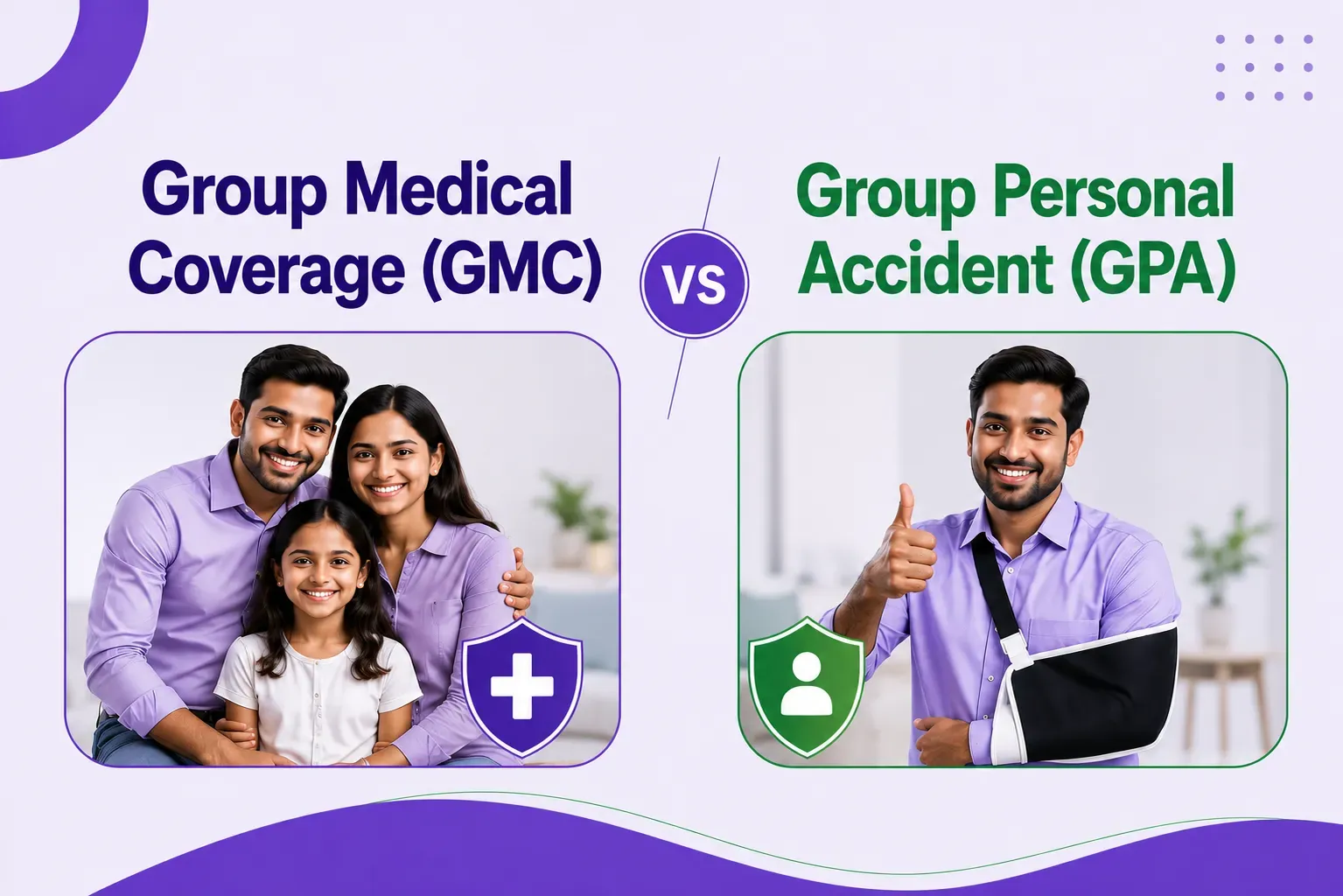
GMC (Group Medical Coverage) and GPA (Group Personal Accident) policies are not the same. These are two crucial employee benefit policies that provide financial protection against various risks.
Under GMC, costs of hospitalisation and medical treatment incurred during the policy term are covered. Meanwhile, GPA provides financial benefits in the event of accidental death, disability, or other accident-related contingencies covered under the policy. Read on to explore the key differences between GMC and GPA and understand how each policy can benefit employees.
Contents

What is GMC Policy?
Group Medical Coverage, or Group Health Insurance is a health care plan that is provided to a group of individuals, typically the employees of an organisation. It covers various healthcare costs such as hospital stays, outpatient treatment, maternity-related expenses, and pre-existing diseases, subject to the policy terms and conditions. The policy may also offer cashless treatment facilities at network hospitals.
What is the GPA Policy?
Group Personal Accident insurance (GPA) offers financial coverage in the event of an accident that causes an injury, disability, or death. It is generally offered to employee groups and may provide worldwide coverage, depending on the policy terms and conditions. In addition to accidental death benefits, the policy may also cover hospitalisation and accident-related medical expenses, as specified in the policy.
Differences Between GMC and GPA Insurance Policies
The table below shows the main differences between GMC and GPA:
What are the Benefits of the GMC Insurance Policy?
Here are some of the main advantages of having a GMC insurance policy:
Extensive coverage for employees' and dependents' health.
Includes hospitalisation, pre-hospitalisation and post-hospitalisation costs, as well as daycare costs, subject to policy terms and conditions.
May help reduce out-of-pocket expenses through cashless treatment at network hospitals.
May offer maternity benefits and cover pre-existing diseases.
What are the Benefits of a GPA Insurance Policy?
The main advantages of a GPA policy are:
Offers financial benefits in the event of accidental death or disability, as specified in the policy.
Covers permanent total, permanent partial and temporary total disability.
May also cover ambulance expenses and funeral costs.
Helps provide financial protection for the employee and their family during accidents.
GMC vs GPA: Which Insurance Policy Should You Choose?
Both GPA and GMC policies come with their own advantages and limitations. The selection of the two options will depend on the type of organisation and the insurance requirements of the employer and employee. For example, industries with a higher risk of accidents, such as construction, may require a GPA policy in addition to GMC coverage. In practice, many organisations opt for a GMC policy along with a GPA add-on.
Conclusion
Both GMC and GPA policies are valuable employee benefits. While GMC focuses on medical expenses and hospitalisation, GPA covers accident-related risks. Together, they can provide broader financial protection for employees and their families.
FAQs
Below are some of the most commonly asked questions about GPA vs GMC insurance policy: are these two health policies the same?

1. What is meant by “off-duty GPA”?
GPA coverage can be designed to cover only on-duty incidents or both on-duty and off-duty incidents. Under on-duty coverage, employees are protected only against accidents that occur while performing their job. In the case of on-duty plus off-duty coverage, employees will be covered under the policy at all times.
2. What determines the payable premium for a GMC and GPA cover, and who makes the payment?
The premium amount depends on the selected coverage and the insurer. In most cases, the employer pays the premium. However, some employers may ask employees to contribute towards the premium. If employees choose additional benefits or add-ons, they are required to pay the extra premium applicable to those enhancements.
3. When should I get a GMC policy for my employees?
You should consider a GMC policy for your employees to attract and retain talented employees, enhance employee well-being and job satisfaction, and provide comprehensive benefits that cover hospitalisation, medical treatments, and other healthcare expenses.
4. Is it mandatory to insure employees under a GPA?
No, it is not mandatory to insure employees under a GPA. However, offering a combination of a GMC policy and a GPA add-on can be a good perk for employees.
5. Why is GPA considered as a benefit-based health insurance cover?
Usually, GMC is an indemnity-based cover, and a GPA is a benefit-based cover. The basic difference here is that in an indemnity policy, the employee is indemnified (payment made for losses) for expenses incurred or to be incurred for medical care. In a benefit-based cover, a predetermined lump sum is offered to the employee. As GPA covers permanent disability, the employee is offered a lump-sum amount as a claim settlement.

Was this article helpful?

Recent
Articles
No Insurance, No Fuel: What the Supreme Court's Pilot Means
Nikhila PS Aug 6, 2026
Supreme Court Extends Third-Party Insurance for New Cars to Four Years
Nikhila PS Aug 6, 2026
Do ADAS Features Reduce Car Insurance Premiums in India?
Nikhila PS Jun 25, 2026
How Do BS6 Bikes Affect Bike Insurance Premiums and Coverage?
Nikhila PS Jun 25, 2026
Top 15 Car Companies in India in 2026
Nikhila PS Jun 25, 2026
All Articles


Want to post any comments?

A group health insurance policy that offers holistic healthcare benefits that your team needs.

Get Quote


#36/5, Hustlehub One East, Somasandrapalya 27th Main Rd, Sector 2, HSR Layout, Bengaluru, Karnataka 560102